Cervical Disc Prolapse Treatment
CERVICAL DISC PROLAPSE TREATMENT
Cervical disc prolapse, also known as a herniated or slipped disc in the neck, occurs when the soft inner core of a spinal disc pushes through the tough outer layer and compresses nerves in the cervical spine. Most cases of cervical herniated disc pain can be successfully managed with nonsurgical treatments, such as over-the-counter pain medications, physical therapy to strengthen and stretch the neck, ice or heat packs, and/or activity modifications to avoid painful movements until the pain has subsided.
Treatment: Conservative treatments such as rest, physical therapy, and pain management are often recommended initially. In severe cases or when conservative measures fail, surgical options like discectomy and fusion may be considered to alleviate nerve compression.
PRECISION CERVICAL SPINE DECOMPRESSION & FUSION
Relieving cervical cord and nerve root impingement to restore neck mobility and arm function
Causes
With age, spinal discs lose water content and elasticity, making them more prone to herniation.
Symptoms
Pain in the neck is a common symptom, often radiating to the shoulders and arms.
Treatment
Surgical intervention may be considered if conservative measures fail or if there is severe neurological involvement.
Rehabilitation
Rehabilitation focuses on regaining strength, flexibility, and range of motion.
CERVICAL DISC PROLAPSE TREATMENT
Key etiological triggers and presenting neurological features of cervical disc disease:
Injury
Trauma or injury to the neck can cause disc herniation.
Numbness and Tingling
Compression of nerves can cause numbness, tingling, or weakness in the arms.
Repetitive Strain
Repetitive activities or poor posture over time can contribute to disc degeneration and prolapse.
Pain with Movement
Pain that worsens with certain movements or positions.
Clinical Radiography & Fusion Outcomes
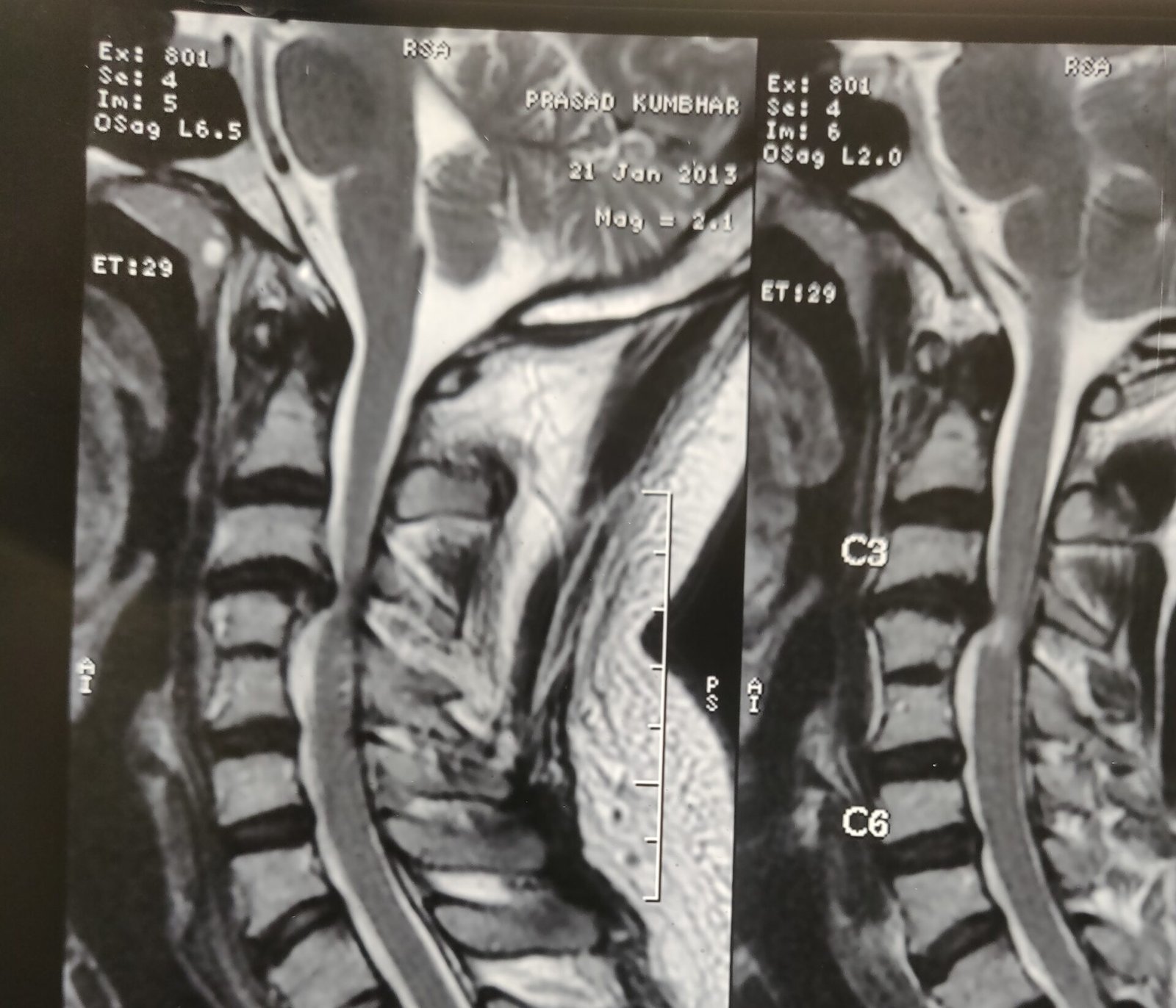
Authentic radiological documentation from Dr. Dilip Kiyawat's cervical spine discectomy and fusion procedures:
 Click to Zoom
CERVICAL DISC Prolapse AT C3-C4 LEVEL CAUSING SPINAL CORD COMPRESSION
High-resolution sagittal MRI scan revealing severe herniation of the C3-C4 intervertebral disc protruding posteriorly into the spinal canal and causing significant cord indentation and radicular symptomology.
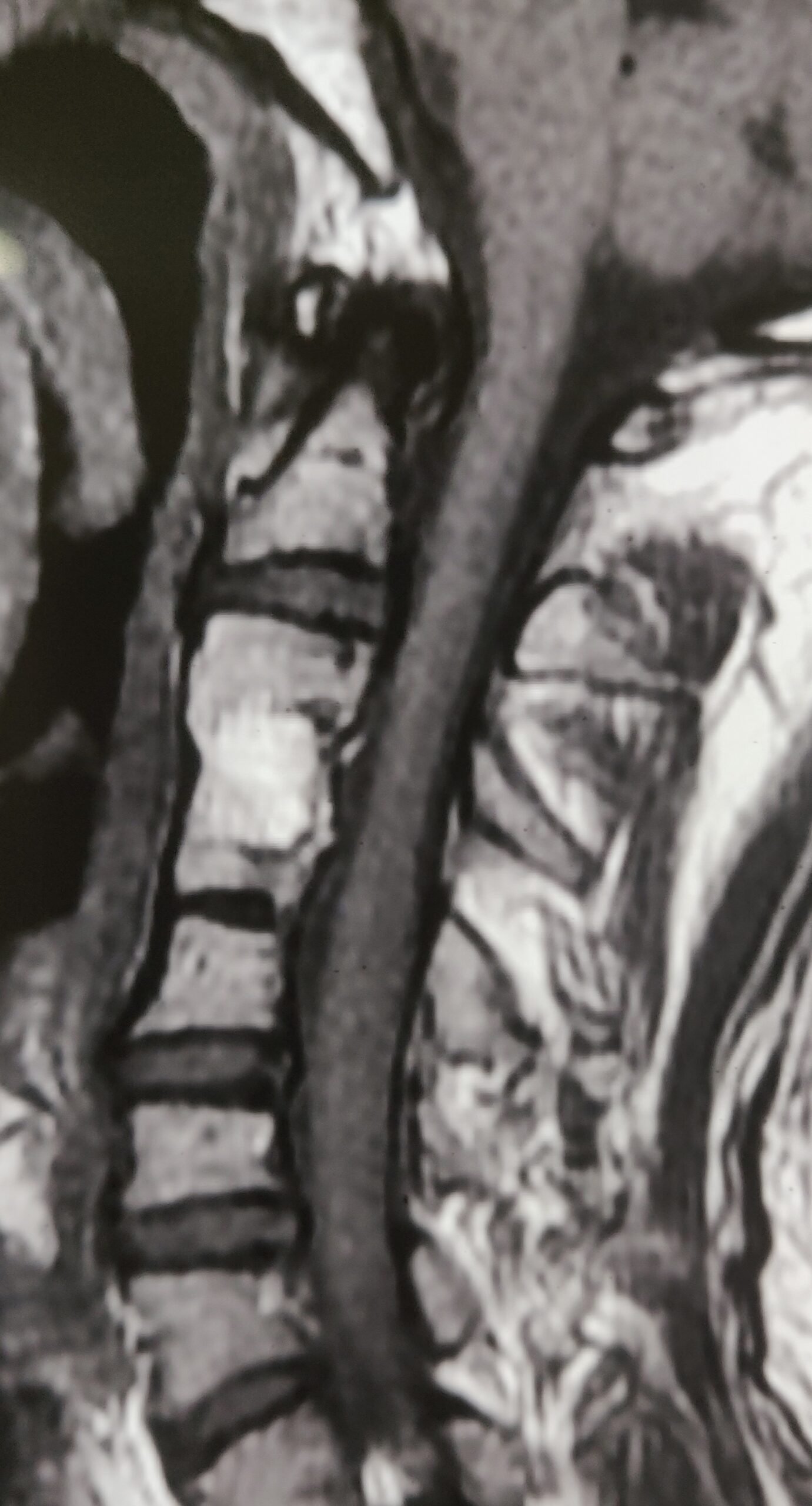
Post Operative MRI & X- Ray Showing good spinal fusion & Relief to cord compression
Post-surgical evaluation demonstrating anterior cervical discectomy, total decompression of neural structures, and solid bone graft stabilization.
 Zoom
Zoom
Relief of Cord Compression
Post-operative sagittal MRI confirms complete excision of the compressing C3-C4 disc fragment, restoration of cerebrospinal fluid space, and relief of cord impingement.
 Zoom
Zoom
Good Fusion with Bone Graft
Post-operative cervical lateral radiograph demonstrating anatomic interbody bone graft positioning, disc space height restoration, and solid fusion progress.
For consultation and appointment booking, you can reach Dr. Dilip Kiyawat at
-
Phone +91 98220 46043
-
Website drdilipkiyawatneurosurgeon.com