Cervical Spondylosis Management
CERVICAL SPONDYLOSIS MANAGEMENT
Cervical spondylosis is a condition characterized by wear and tear affecting the discs and joints in the cervical spine (neck). It is a common age-related condition, and while it may not always cause symptoms, it can lead to pain and discomfort in some individuals. As people age, the spinal disks in the neck shrink and bone spurs often develop. If symptoms occur, nonsurgical treatments are usually effective.
COMPREHENSIVE CERVICAL SPINE DEGENERATION CARE
From advanced non-surgical modalities and targeted physiotherapy to precision microsurgical decompression and fusion
Medication
- Nonsteroidal anti-inflammatory drugs (NSAIDs) such as Ibuprofen or Diclofenac help reduce pain and inflammation.
- Muscle relaxants help alleviate acute and chronic muscle spasms.
- Pain relievers, such as acetaminophen, can be used for ongoing pain management.
Physical Therapy
- Targeted exercises to improve neck muscle strength and cervical range of motion.
- Advanced modalities including cervical traction, heat or cold therapy, therapeutic ultrasound, and IFT (interferential therapy).
Neck Braces or Collars
In some cases, a soft or rigid neck brace may be recommended for short intervals to limit excessive neck movement, reduce facet joint stress, and provide structural support.
Surgery
Surgery is usually considered when conservative measures fail or in severe cases where there is compression of the spinal cord or nerve roots. Surgical options may include anterior cervical discectomy and fusion (ACDF), laminectomy, or laminoplasty.
CERVICAL SPONDYLOSIS MANAGEMENT
Key etiological changes and preventive lifestyle strategies to arrest cervical degeneration:
Bone Spurs
Overgrowth of bone (osteophytes) may develop on the edges of vertebrae, potentially narrowing the neural foramina and spinal canal space.
Lifestyle Changes
Maintain good spinal posture to reduce neck strain; avoid prolonged periods of stationary sitting or standing; and use ergonomic chairs and monitors.
Corticosteroid Injections
Fluoroscopically guided corticosteroid injections may be considered for severe radicular pain and facet inflammation on a short-term basis.
Weight Management
Maintaining an optimal, healthy body weight significantly reduces mechanical loading and chronic axial stress on the cervical spine.
Exercise & Ergonomics
Regular low-impact exercise, especially neck and shoulder isometric stretches, helps maintain cervical flexibility, enhances blood flow, and strengthens the postural musculature supporting the neck.
Clinical Radiography & Surgical Outcomes
Authentic radiological documentation from Dr. Dilip Kiyawat's cervical spondylosis and canal decompression cases:
 Zoom
Zoom
Cervical Disc Bulges with Canal Stenosis & Cord Compression
Sagittal MRI demonstrating severe multi-level cervical spondylotic degenerative changes, osteophytic disc bulges, and central canal stenosis compressing the spinal cord.
 Zoom
Zoom
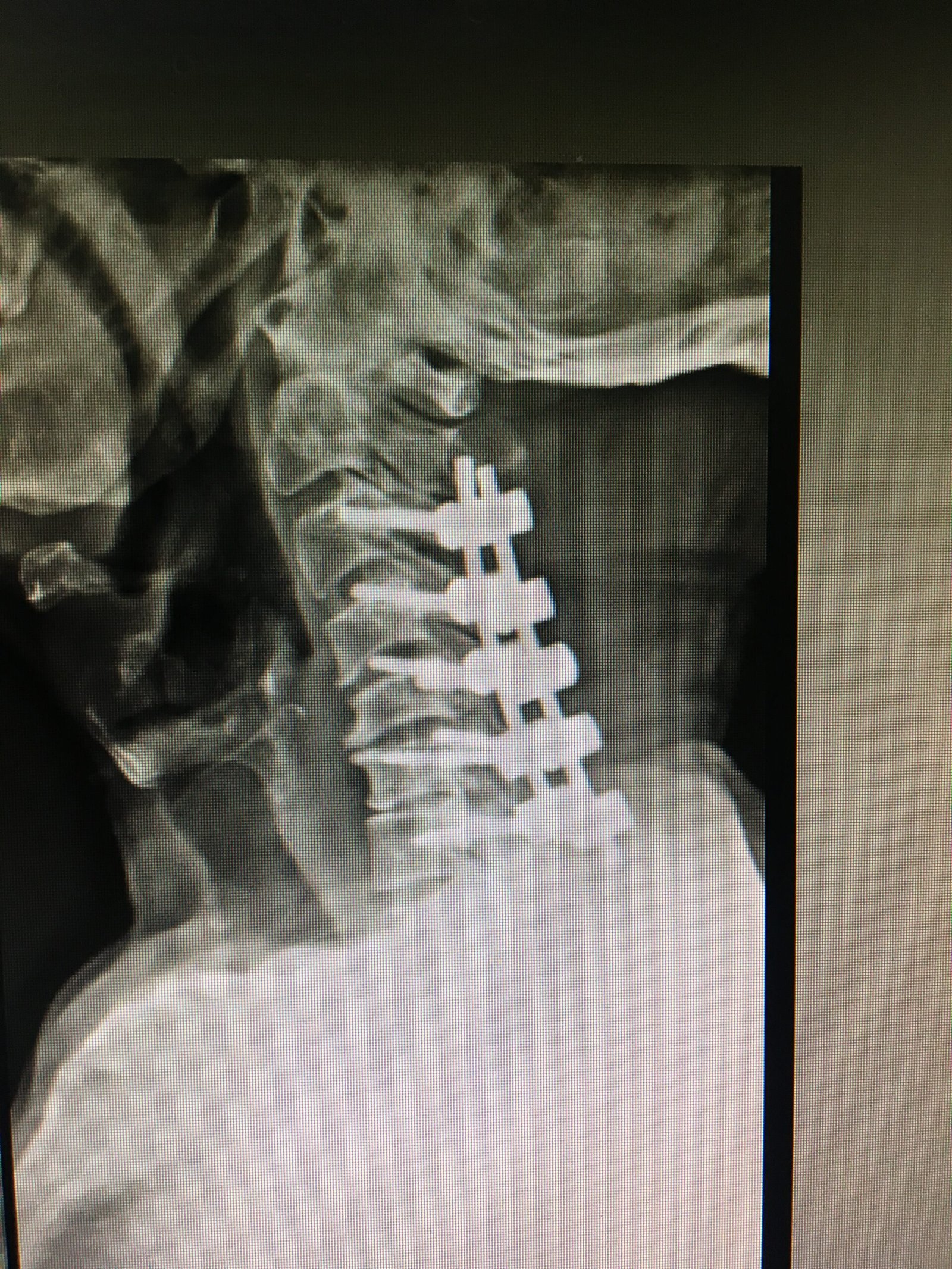
Decompression & Stabilization Done
Post-operative lateral cervical imaging confirming complete excision of degenerative discs, neural canal decompression, and rigid anterior cervical plate and screw construct.
 Zoom
Zoom
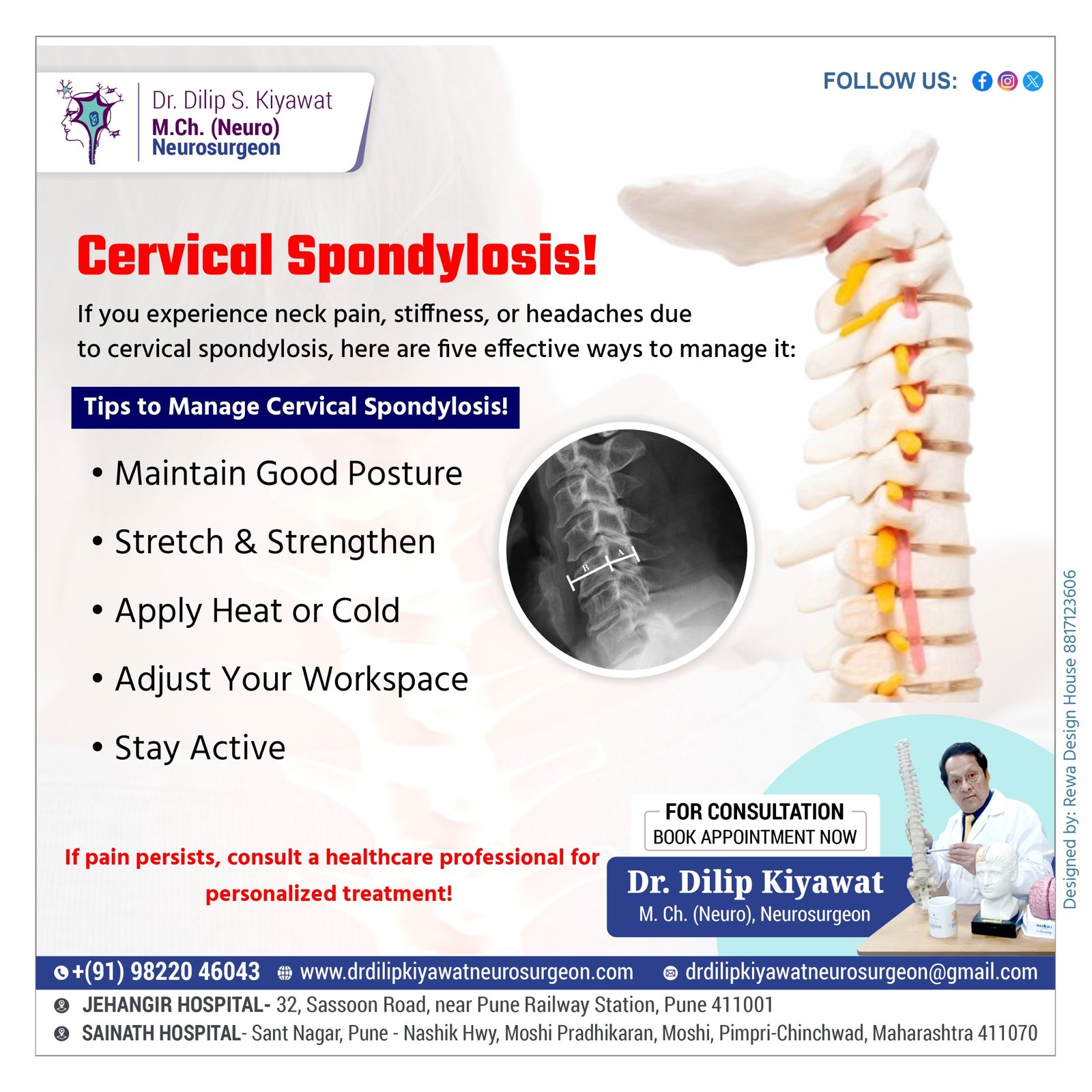
Cervical Spine Degeneration & Spondylotic Anatomy
Comprehensive anatomical overview detailing disc dehydration, disc height loss, facet joint hypertrophy, and secondary bone spur formation causing cervical radiculopathy and myelopathy.
For consultation and appointment booking, you can reach Dr. Dilip Kiyawat at
-
Phone +91 98220 46043
-
Website drdilipkiyawatneurosurgeon.com