Spondylolisthesis
SPONDYLOLISTHESIS
Spondylolisthesis is a spinal condition where one vertebra slips forward or backward in relation to the vertebra below it. This displacement most commonly occurs in the lower spine and is often caused by degenerative changes, congenital defects, or stress fractures. Symptoms may include lower back pain, stiffness, and nerve compression symptoms like leg pain or weakness. Diagnosis involves imaging studies such as X-rays, CT Scan, and MRI.
VERTEBRAL SLIPPAGE CORRECTION & SPINAL FUSION
Restoring spinal alignment, decompressing neural pathways, and achieving permanent segmental stability
Causes
Some individuals may have a genetic predisposition to spondylolisthesis due to a defect in the vertebrae present at birth.
Symptoms
In severe cases, there may be numbness or weakness in the legs.
Treatment
Exercises to strengthen the core muscles and improve flexibility. Surgical Correction & Stabilization is necessary where symptoms persist.
Rehabilitation
Adopting spine-friendly habits and avoiding activities that may contribute to further slippage.
Spondylolisthesis
Detailed clinical aspects and diagnostic pathways:
Trauma
A fracture in the pars interarticularis (a small bony segment in the posterior part of the spine) can result in spondylolisthesis.
Imaging Studies
X-rays, CT scans, or MRI may be used to visualize the spine and determine the extent of slippage.
Back Pain, Leg Pain & Muscle Tightness
Persistent lower back pain is a common symptom. Radiating pain into the buttocks and thighs may occur. Tightness or stiffness in the hamstrings.
Decompression and Fusion
Removal of damaged disc material and stabilization of the spine through fusion.
Radiological Findings & Operative Fixation
Authentic pre-operative and post-operative records from Dr. Dilip Kiyawat's spinal stabilization cases:
 Zoom
Zoom
Spondylolisthesis AT L5-S1 LEVEL DUE TO FRACTURE
Lateral lumbosacral view illustrating anterior displacement of the L5 vertebra over S1 caused by bilateral pars interarticularis fractures.
 Zoom
Zoom
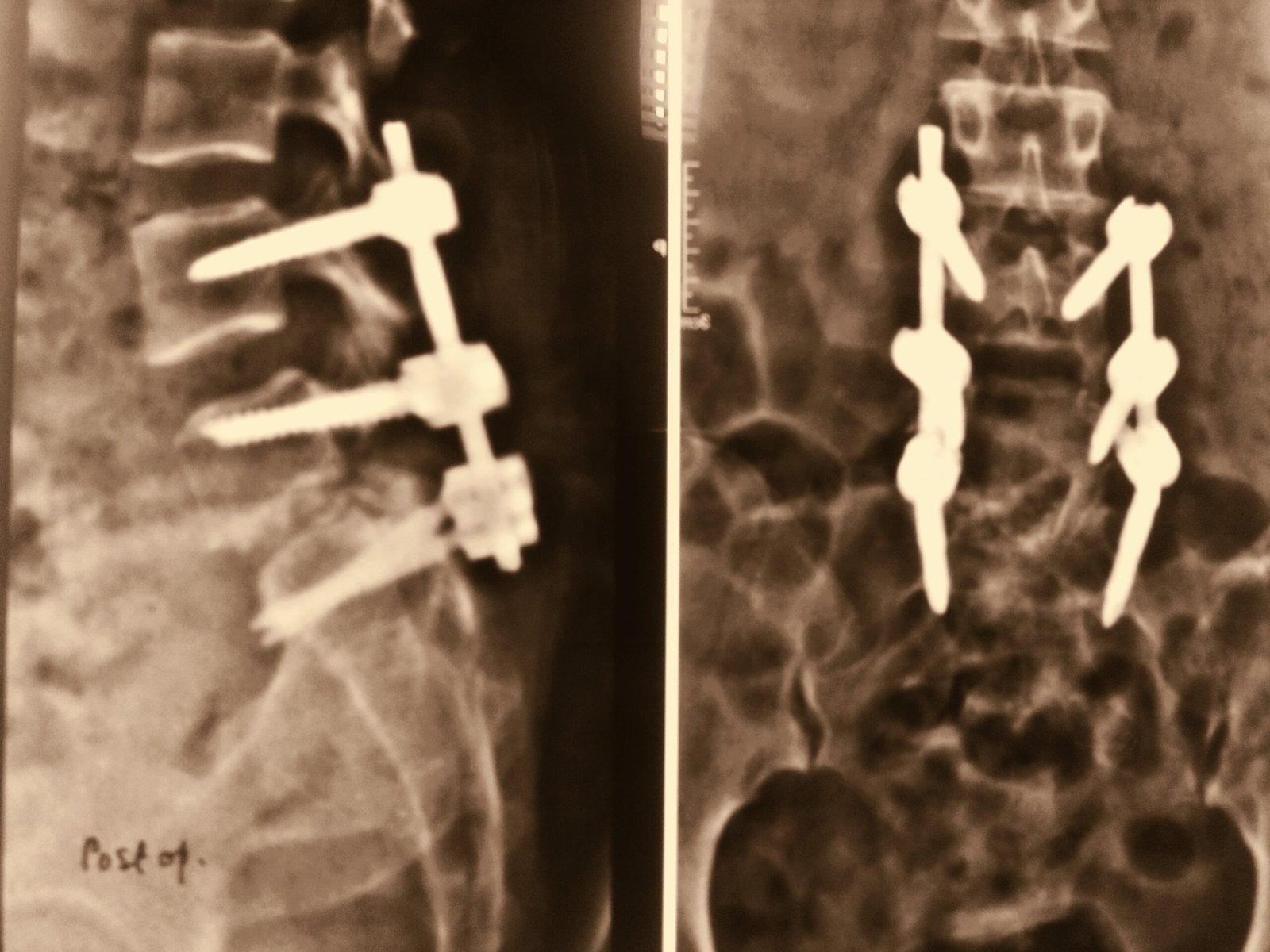
cORRECTION OF Spondylolisthesis BY sURGICAL sTABILIZATION
Complete surgical reduction and rigid stabilization utilizing titanium pedicle screw instrumentation, interbody cage, and bone fusion.
 Zoom
Zoom
Dynamic Instability Assessment
Serial imaging demonstrating progressive slip excursion, leading to severe neurogenic claudication and radiculopathy.
 Zoom
Zoom
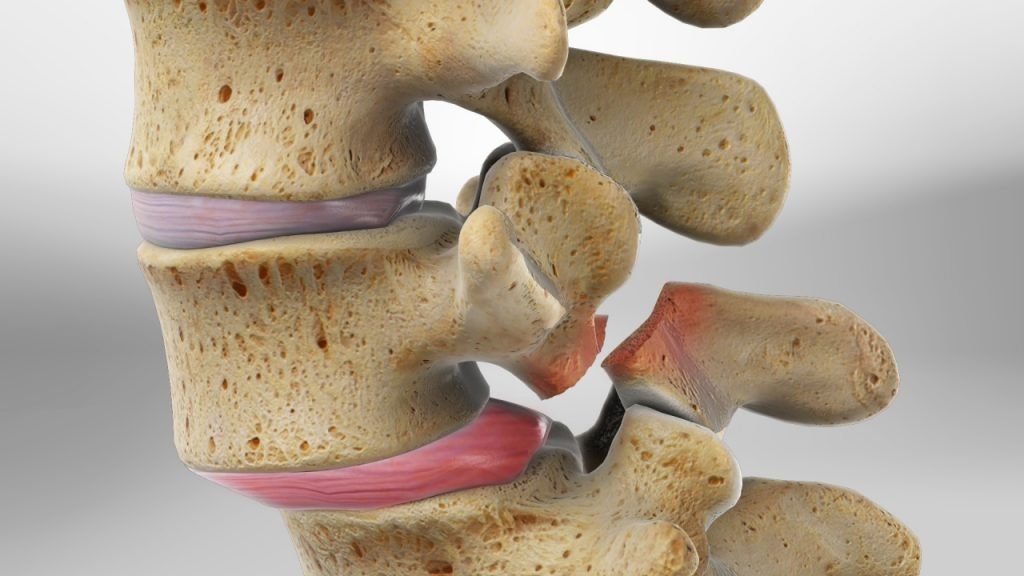
Pathology of Vertebral Displacement
Detailed overview showing the shearing forces on the intervertebral disc and the mechanism of central/foraminal nerve entrapment.
Understanding Spondylolisthesis Grades & Treatment
For consultation and appointment booking, you can reach Dr. Dilip Kiyawat at
-
Phone +91 98220 46043
-
Website drdilipkiyawatneurosurgeon.com