
OPLL Treatment
OPLL TREATMENT
As the name suggests it is thickening with calcium in the ligament which layers the posterior aspect of vertebrae. It usually involves the cervical region. The actual cause of OPLL is not known but it has genetic and geographical preferences together with wear and tear of the spine especially in heavy laborers. The condition progresses over time in its extent of length and thickness.
Symptoms: It may remain silent for years and symptoms may appear following some trauma or as a result of ongoing wear and tear. Neck pain, neck discomfort, or stiffness in his neck are the main features initially. As the OPLL gets thicker it occupies the spinal canal space and starts pressing on the spinal cord. Such patients develop weakness, stiffness, and tingling in all four limbs. Advanced cases develop difficulty in walking and loss of bladder and bowel control.
Treatment: The treatment of choice is decompression of the spinal cord. This is done either by laminectomy (removing the posterior part of the vertebrae called the lamina) or laminoplasty (widening the spinal canal by partly lifting the laminae). Decompression is accompanied by stabilization of the spine. The benefit of the surgery is seen within days. These patients need further physiotherapy for recovery.
OSSIFICATION OF POSTERIOR LONGITUDINAL LIGAMENT
Specialized cervical canal decompression, laminoplasty, and instrumented stabilization to prevent permanent cord injury
Causes
The exact cause of OPLL is not fully understood, but there is a genetic predisposition in some cases, along with mechanical stress and chronic wear and tear.
Symptoms
Compression of the spinal cord or nerve roots can lead to numbness and weakness in the arms and legs, leading to cervical myelopathy.
Treatment
Surgical intervention is considered for severe cases with significant neurological deficits or if conservative measures fail to arrest progression.
Rehabilitation
Physical therapy is crucial for improving mobility, strength, and flexibility, as well as retraining balance and coordinating ambulation.
OPLL treatment
Detailed symptom profile and surgical interventions for ossification of the spinal ligament:
Neck Pain
Pain and stiffness in the neck are common initial symptoms, often exacerbated by trivial injury or postural changes.
Pain Management
Medications may be prescribed for pain management, muscle relaxants, and neuroprotective anti-inflammatory support.
Difficulty Walking
Severe cases may result in difficulty walking or maintaining balance due to compression of descending corticospinal motor tracts.
Surgery
Spinal fusion may be performed to stabilize the spine after decompression (laminectomy or laminoplasty) to ensure long-term stability.
Radiological Findings & Post-Op Fixation
Authentic radiological records from Dr. Dilip Kiyawat's complex cervical OPLL surgeries:
 Zoom
Zoom
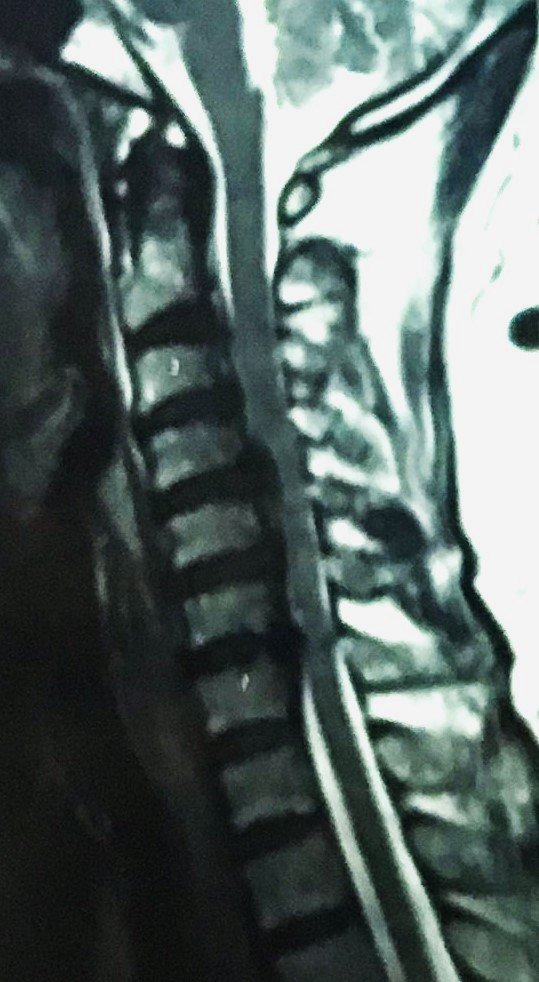
Ossified Posterior Longitudinal Ligament (Opll) causing compression of spinal cord
Sagittal scan displaying dense continuous ossification along the posterior vertebral margins severely impinging the cervical spinal cord.
 Zoom
Zoom
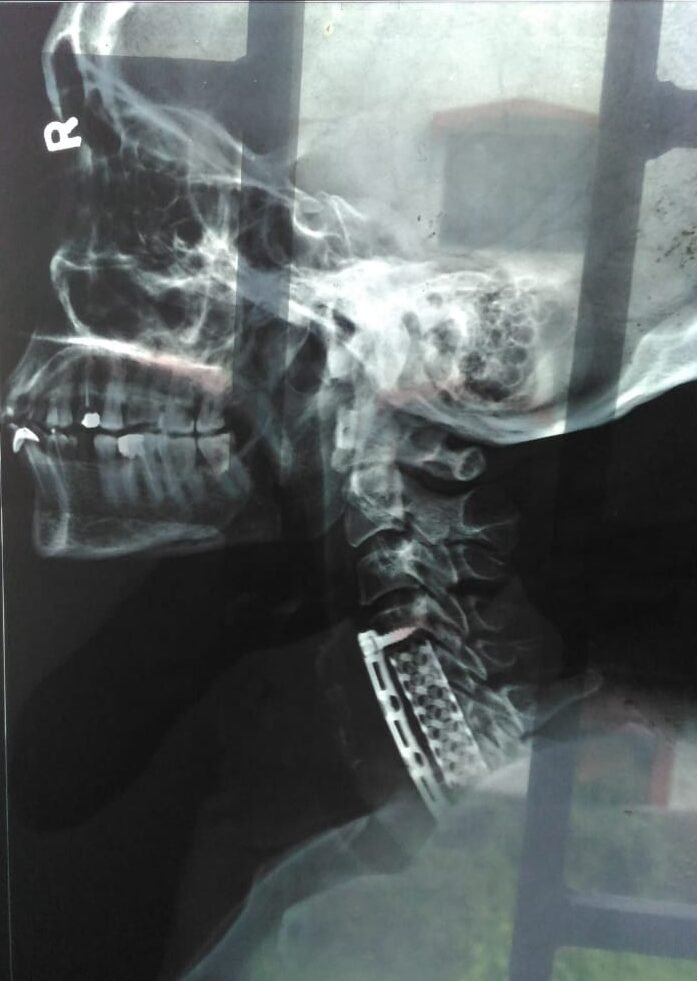
Decompression and stabilization of OPLL done
Lateral cervical radiograph showing successful posterior decompressive laminectomy paired with rigid multi-level lateral mass screw-rod fixation.
 Zoom
Zoom
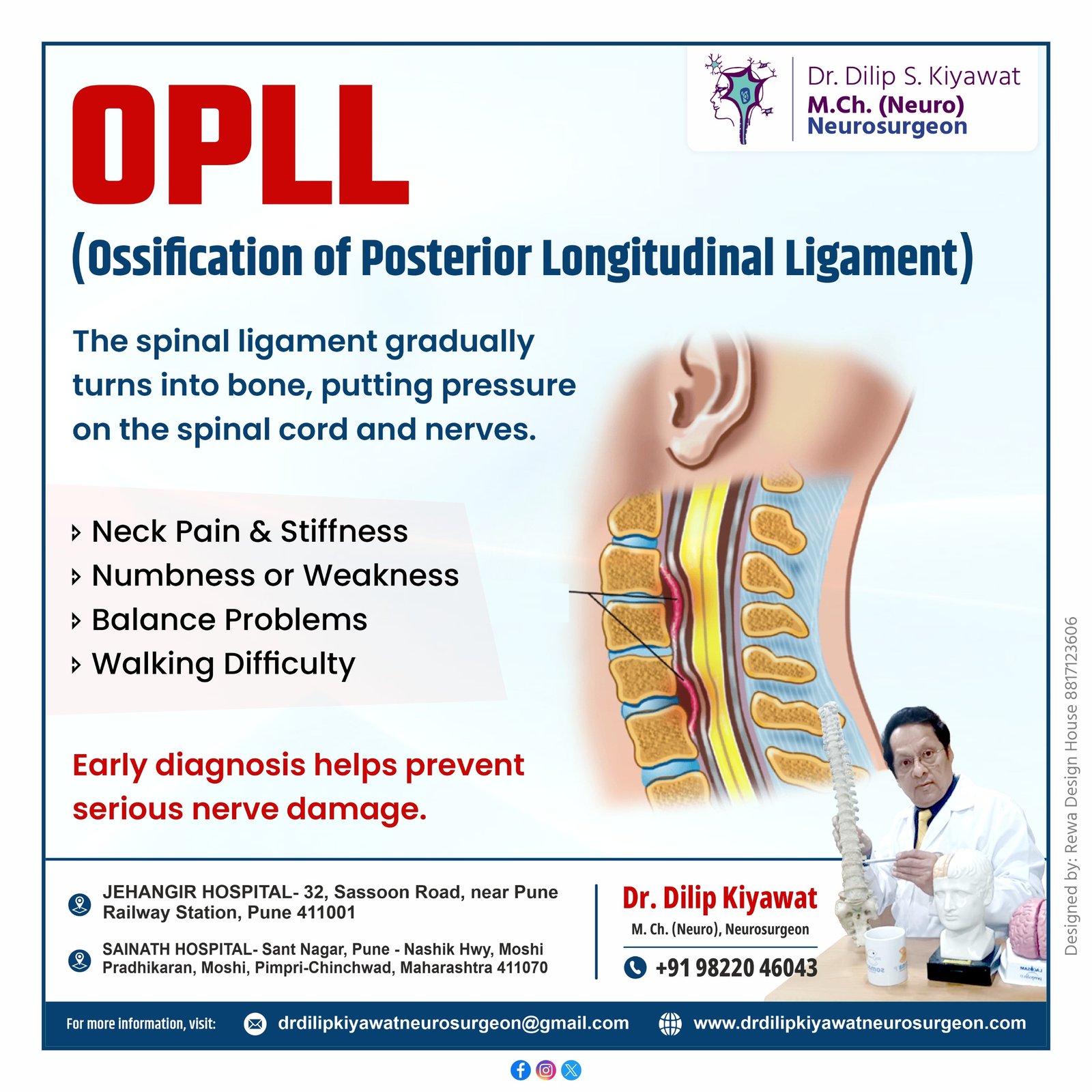
Cervical OPLL Pathology & Myelopathy Mechanics
Clinical diagram detailing the transformation of flexible ligamentous tissue into rigid bone, causing progressive transverse spinal cord compression.
For consultation and appointment booking, you can reach Dr. Dilip Kiyawat at
-
Phone +91 98220 46043
-
Website drdilipkiyawatneurosurgeon.com