Fracture of Spine
Vertebral Fracture & Spinal Stabilization Care
A spine fracture refers to a break or cracks in one or more vertebrae. These fractures can result from various causes, including trauma, falls, sports injuries, or underlying conditions like osteoporosis, which weakens the bones. The severity of a spine fracture can range from mild compression fractures to more severe fractures with potential damage to the spinal cord. Common symptoms include back pain, difficulty moving, numbness, or tingling. Diagnosis typically involves imaging studies such as X-rays, CT scans, or MRI to assess the extent of the fracture and check for spinal cord involvement.
Treatment :- Treatment depends on the type and severity of the fracture. Mild fractures may be managed with rest, pain medication, and physical therapy, while more severe cases may require bracing, surgery, or other interventions to stabilize the spine and prevent complications. Early diagnosis and appropriate management are crucial for optimal recovery and preventing long-term complications.
FRACTURE OF SPINE
Precision vertebral reconstruction, percutaneous stabilization, and neurological protection
Causes
Weakening of the bones, making them more prone to fractures, or spinal infections that weaken the structural integrity of the vertebrae, leading to collapse.
Symptoms
Severe pain at the site of the fracture. Pain typically intensifies with postural changes, walking, coughing, or physical pressure on the affected spinal segment.
Treatment
Required for severe fractures or cases involving spinal instability. Advanced surgical procedures involve the use of titanium plates, pedicle screws, or rods to stabilize the spine.
Rehabilitation
Structured physical rehabilitation protocols and regular check-ups to monitor bone healing, prevent deformities, and address any functional complications.
An Illustrative Case
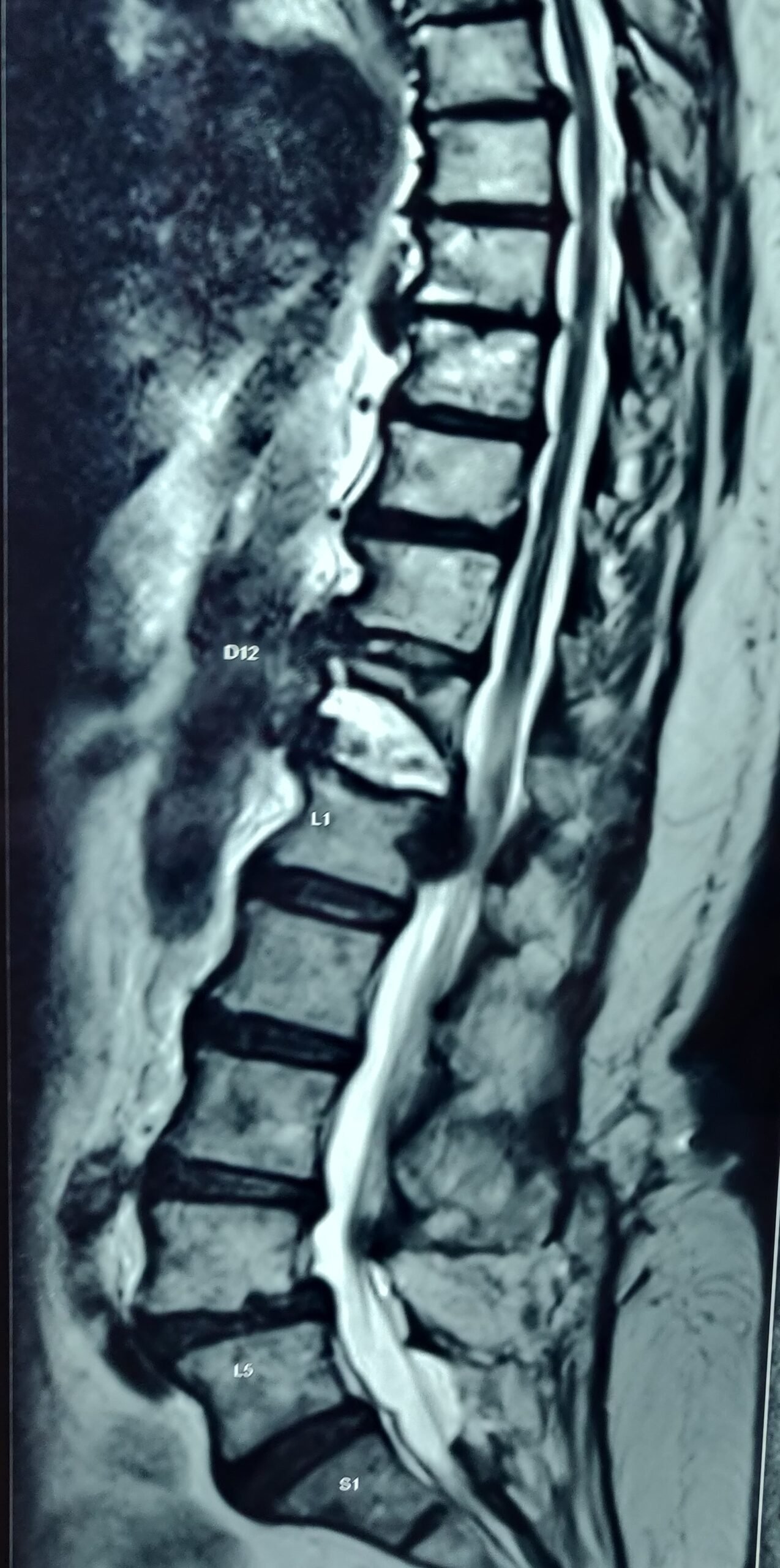
Elderly lady had a trivial fall at home, started complaining of severe back pain over the days to the point she could not sit or stand. MRI demonstrated acute collapse of D-12 vertebral body due to osteoporosis leading to fracture.
Stabilization
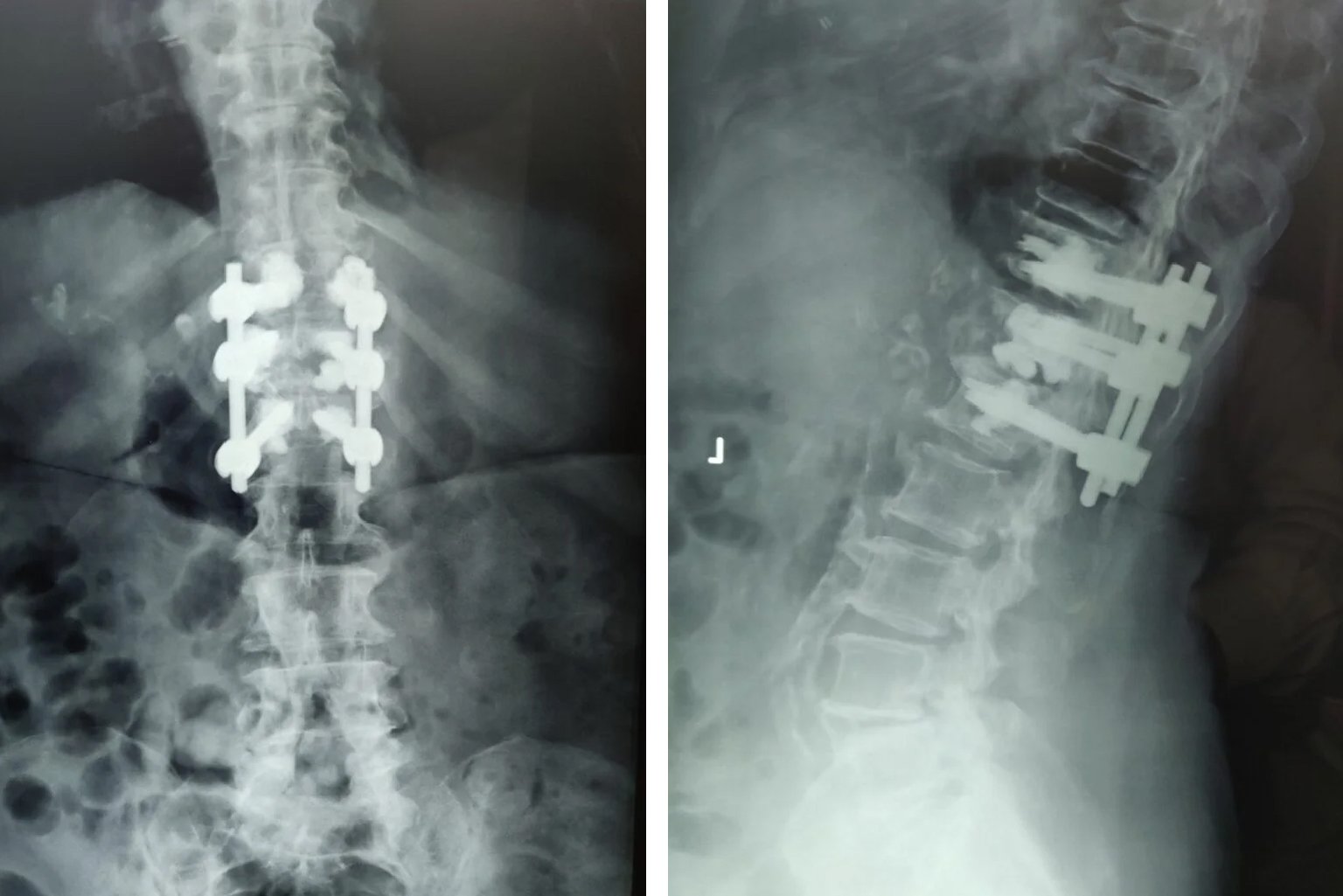
Surgery of the collapsed vertebra successfully completed using pedicle screws & connecting rods, reinforced with medical-grade bone cement (Vertebroplasty/Kyphoplasty).
Radiological Documentation & Post-Op Fixation
 Zoom
Zoom
D12 spine compression fracture
Pre-operative Sagittal MRI showing acute D-12 vertebral body collapse
 Zoom
Zoom
compression fracture stabilization surgery done
Post-operative radiograph showing rigid screw-rod fixation & cement reinforcement
For consultation and appointment booking, you can reach Dr. Dilip Kiyawat at
-
Phone +91 98220 46043
-
Website drdilipkiyawatneurosurgeon.com